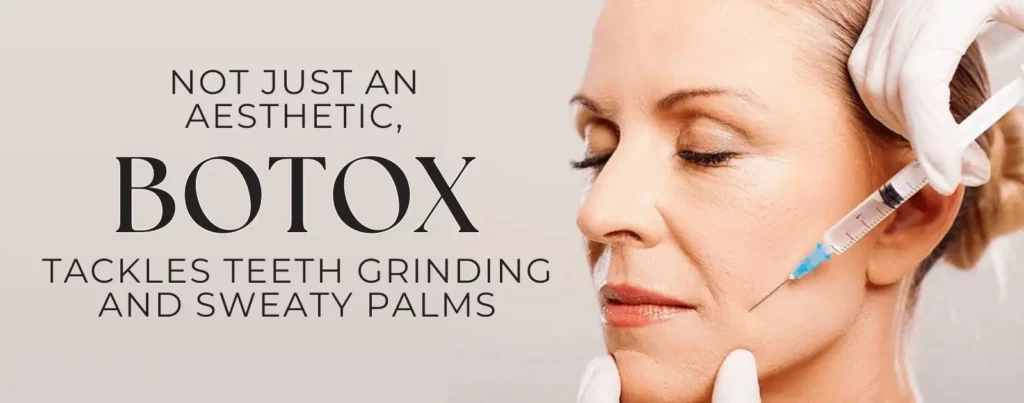
Most people come in asking the same thing: “Am I too early, or did I wait too long?” The truth is, Botox isn’t a single treatment — it’s two different strategies that happen to use the same product. One works before lines set in. The other works after they have. Which one fits where you are right now depends on what your skin is actually doing, not how old you are. Here’s how to tell them apart.
Is There Really Such a Thing as Starting Botox “Too Early”?
Starting Botox before you feel like you “need” it still trips people up. The concern makes sense. It sounds extreme to treat something that isn’t fully visible yet. In practice, though, the timing is exactly what makes preventative treatment work.
When you squint, raise your brows, or frown, the same muscles fire every single time. Over years, that repetitive movement creases the skin in the same spots — and eventually, those creases stop bouncing back. Preventative Botox interrupts that cycle before it finishes. A small amount of product placed in the right muscle slightly reduces how hard it contracts. The skin above it stops folding as deeply. The crease never gets a chance to become permanent.
Most people start somewhere between their mid-20s and early 30s. That range isn’t arbitrary — it’s roughly when skin starts losing the elasticity that used to smooth things back out on its own. Some people in their 20s genuinely aren’t there yet. Others are. Your own movement patterns, genetics, and lifestyle matter more than a number.
A few things that point toward preventative treatment making sense right now:
- Lines across your forehead or between your brows are still visible a few seconds after your face goes neutral
- A parent or sibling has deep 11s or heavy forehead lines, and your face is starting to move the same way
- You spend significant time outdoors, under harsh lighting, or in front of screens — all of which pull more movement and UV exposure from your skin daily
- You catch yourself in photos and notice lines that don’t match how rested you feel
Doses on the preventative side tend to be lighter. The goal isn’t stillness — it’s just enough of a reduction in movement that the skin stops taking the same hit over and over.
What If Lines Are Already There — Is It Too Late?
It isn’t — the approach just changes.
Once lines are visible when your face is fully relaxed, they’re called static lines. That distinction matters because it tells you what you’re actually treating. A line you only see mid-expression is a movement problem. A line you see when you’re doing nothing is a texture problem — the skin itself has taken on that shape.
Corrective Botox still works on the muscle. Relaxing it stops the skin from folding in the same spot repeatedly, which gives collagen a chance to start recovering the surface. It doesn’t happen overnight. After the first treatment, most people see lines soften noticeably — typically somewhere between 50 and 70 percent — with further improvement showing up over the following months as the skin gradually responds.
Deeper, more established lines sometimes need a second layer of support. Providers will occasionally recommend pairing Botox with a small amount of dermal filler to restore the volume that’s been lost underneath — filler addresses the structural gap while Botox addresses the muscle driving the problem. Not everyone needs both, but it’s worth discussing if you’ve had the same lines for a few years.
Results do take a bit longer to fully show on the corrective side compared to preventative. That’s not a flaw — it reflects what the skin is working through. Consistency across two or three treatment cycles is usually where people start seeing the results they were picturing.
Does the Treatment Itself Feel Different Depending on Which Type You’re Getting?
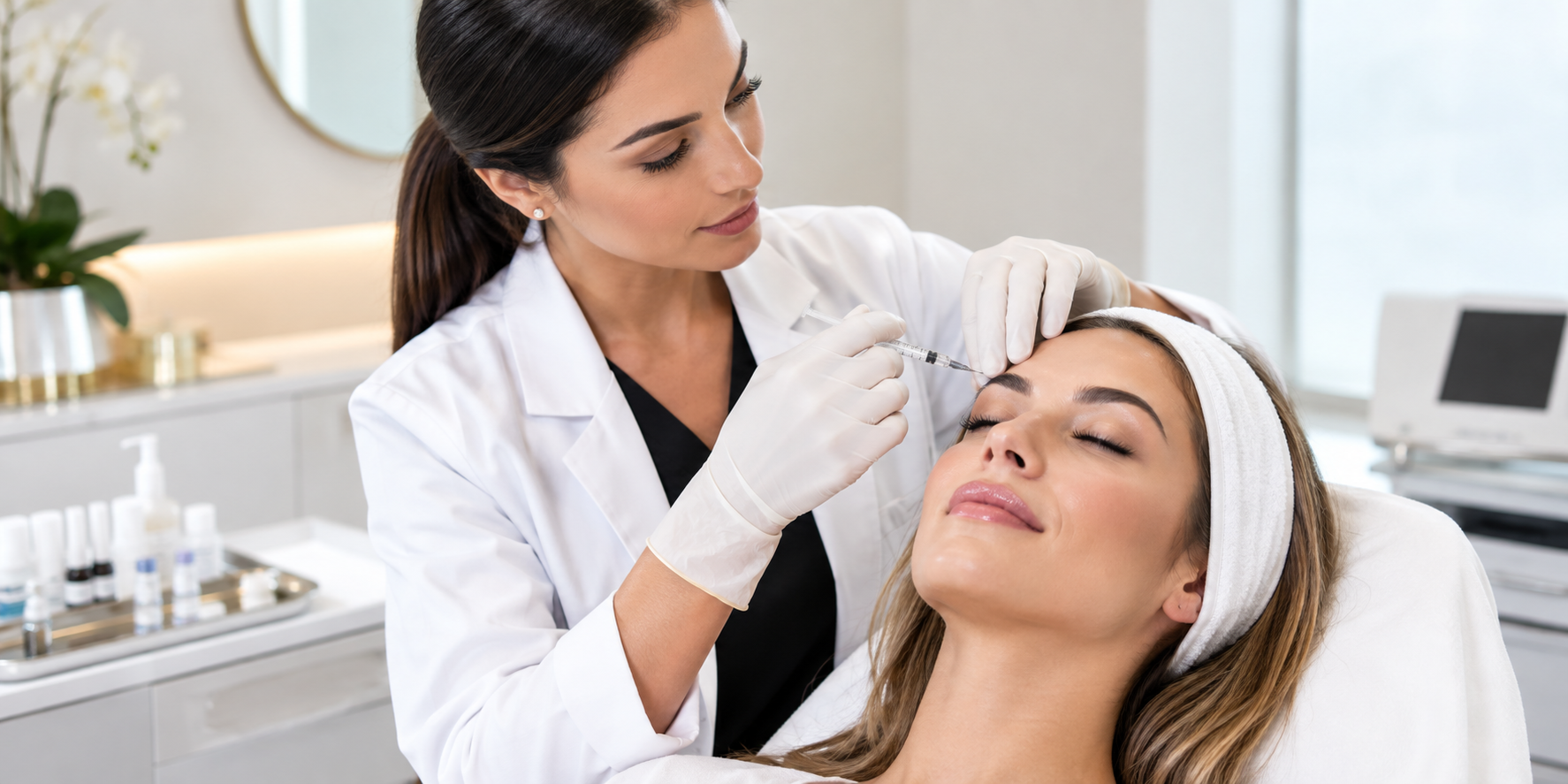
In the chair? No real difference. The product is the same, the needles are the same, and the appointment itself usually runs under 30 minutes either way. Most people describe the injections as a quick pinch — nothing that requires recovery time or changes your day.
Where the two approaches diverge is in the conversation before treatment starts.
For preventative work, a thorough injector will watch your face move. They’ll ask you to raise your brows, squint, frown hard — then observe which muscles are overworking and where early crease patterns are starting to form. Treatment follows the movement, not a generic map.
Corrective treatment starts differently. The injector is looking at what’s already on the surface — how deep the lines run, where they concentrate, whether the surrounding skin shows volume loss that Botox alone won’t fully address. The assessment shapes everything that comes next.
If a clinic skips that whole process and heads straight to discussing units, that’s a sign the treatment plan isn’t actually tailored to your face. A good consultation takes time for a reason.
Which One Is Right for You?
There’s no single answer because skin doesn’t work on a single timeline. What’s true for someone with deep genetic creasing in their late 20s isn’t true for someone in their 40s with minimal line formation. That said, some patterns hold.
Preventative Botox tends to fit if:
- Expression lines are starting to linger after your face relaxes, even slightly
- You want to slow the formation of lines rather than manage them once they’re established
- Consistent maintenance over time is something you’re already open to
Corrective Botox tends to fit if:
- Lines are visible when your face is completely at rest
- You’ve noticed the same creases showing up in photos regardless of lighting or angle
- You’re ready to combine treatments if that’s what the assessment recommends
One thing that applies to both: Botox doesn’t hold permanently. Results typically last three to four months, after which muscle activity gradually returns. For preventative patients, spacing out appointments consistently is what preserves the effect. For corrective patients, regular treatments allow the skin to keep responding between sessions — the improvement tends to build rather than reset each time.
Should You Be Talking to a Specialist Before Deciding?
A good provider won’t just confirm you’re a candidate. They’ll tell you honestly where your skin is, which approach actually makes sense right now, and — if the timing isn’t right — when it might be. That kind of clarity is what makes the difference between a result that fits and one that just happened.
At 3D Lifestyle, that’s the conversation we start with. Real assessments, treatment plans built around your face, no pressure to do more than what’s warranted. Whether you’re in your late 20s weighing whether to start or you’ve had the same forehead lines for a decade and want to do something about them — come in and we’ll tell you what we actually see.
Book your Botox consultation at 3D Lifestyle today.