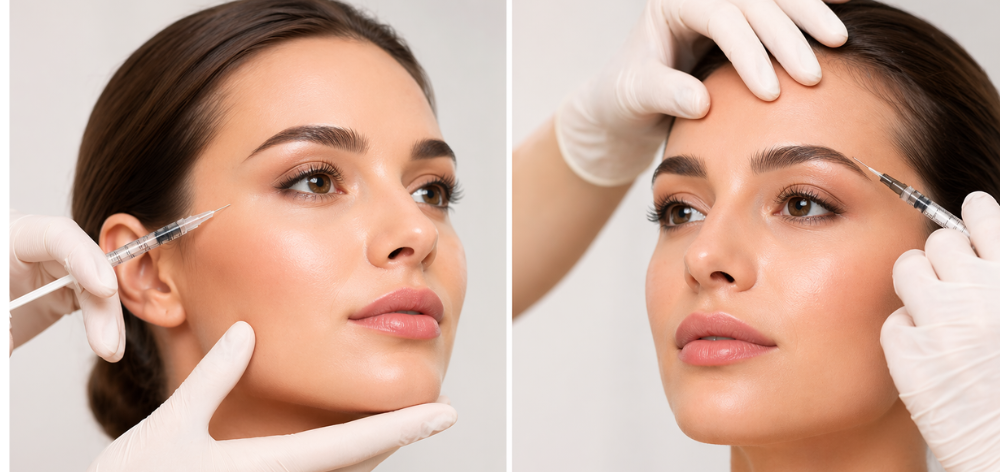
You have done your research and booked an appointment for Botox. You sat through the consultation and got the treatment. While recalling the aftercare instructions and getting a close-up look in the mirror, a question crosses your mind: How long will the results last?
This is a common question, and the answer is a bit complicated. Don’t panic because the answer is pretty simple, but it requires a bit of understanding. So, let’s get into it.
How Long Does Botox Actually Last?
3 to 4 Months.
This timeline is accurate for most people. However, it does not give the complete picture.
For first-timers, Botox sometimes metabolizes faster. Your body hasn’t encountered it before. Some people find their first treatment lasts closer to two months before movement starts returning.
After a few consistent treatments, something shifts. The muscles responsible for the aging signs were completely relaxed, and over time, they became less active. With some aftercare, the results last longer, sometimes 6 to 5 months. If you keep up the maintenance treatments for a year, you can enjoy a youthful look for up to 12 months.
Factors that affect how long Botox lasts:
- Metabolism — The faster your metabolism, the quicker the BOTOX will break down.
- Muscle Strength and Size — Muscles that are more active and bigger in size need extra product because they break it down faster.
- Dosage — Higher units tend to last longer than conservative amounts.
- Treatment Area — Body parts that tend to move more, such as the mouth, require more product compared to those that move less, like the forehead.
- Physical Activity — Very high-intensity exercise may speed up breakdown.
- Sun Exposure — UV damage accelerates skin aging and may reduce longevity.
The three-to-four-month window is a reasonable expectation. But your experience may vary, and that’s completely normal.
How Long Do Fillers Last?
This is where things get more complicated. Because “fillers” isn’t one product. It’s a category, and different fillers behave very differently in the body.
Hyaluronic acid fillers are the most common. They are used in lips, cheeks, under-eyes, jawline, and nasolabial folds. Depending on the product and where it’s placed, they typically last:
- Lips — Six to nine months. The mouth moves constantly, which breaks down the product faster.
- Nasolabial Folds — Nine to twelve months.
- Cheeks — Twelve to eighteen months, sometimes longer.
- Under-Eyes — Nine to twelve months, though the delicate tissue here varies.
- Jawline and Chin — Twelve to eighteen months.
Thicker, denser fillers placed deeper in the tissue tend to last longer. Softer fillers used in more mobile areas break down faster.
Then there are biostimulators like Sculptra and Radiesse. These work differently. Instead of adding immediate volume, they stimulate your body’s own collagen production. Results build gradually over several months and can last two years or more.
Why Do Some People’s Results Last Longer Than Others’?
If this thought has crossed your mind, then you are probably frustrated with why your friend’s BOTOX looks on point, and yours doesn’t. There are several factors that influence the results of the timeline. These include:
- Genetics — Some people’s bodies metabolize hyaluronic acid faster than others.
- Lifestyle — Habits such as smoking break down collagen faster, shortening filler longevity. Exposure to UV rays has the same effect.
- Hydration — Hyaluronic acid binds to water. Well-hydrated skin holds filler better and longer.
- Stress Levels — Chronic stress accelerates cellular breakdown across the board.
- Skincare Routine — A person with a morning and nighttime skincare routine will have better results than someone whose skin is neglected.
- Exercise Habits — Cardiovascular activity makes you sweat and increases metabolism. This speeds up product absorption.
You have more control over longevity than you might think. Taking care of your skin between treatments makes a real difference.
Is It Safe to Keep Getting Botox and Fillers Repeatedly?
For most people, yes. When administered correctly by a trained provider, both Botox and fillers have strong safety records built over decades of use.
A few things worth knowing:
- Botox doesn’t accumulate in the body. It’s broken down and cleared completely between treatments
- Hyaluronic acid fillers are naturally occurring in the body. They dissolve over time without leaving anything behind
- Repeated Botox over the years can cause some muscle atrophy in treated areas, which is actually why long-term users often need less product
- Filler, however, can accumulate if you’re adding more before the old product has fully dissolved. This is why a good provider assesses what’s already there before topping up
The risk isn’t in repeat treatments done correctly. The risk is in repeat treatments done carelessly — too much product, wrong placement, wrong timing. Choose your provider carefully. Every time.
Can You Make Botox and Fillers Last Longer?
This is entirely in your hands… more so your ability to follow the aftercare instructions. Things that genuinely help include:
- Drink Lots of Water — This supports the hyaluronic acid levels in your skin.
- Apply Sunscreen Daily — Premature breakdown is caused by UV damage, so be generous with the SPF.
- Take Extra Care After the Treatment — The first 48 hours decide how long the product will last.
- Have a Solid Skincare Routine — Skin that is well-nourished holds results better.
- Avoid Smoking — Tobacco breaks down collagen faster and shortens the results.
- Don’t Over-Exert Yourself — Exercising immediately after the treatment does not give the product time to settle, and it can migrate.
- Go for a Top-Up Early — It’s easier to maintain the results than starting from scratch.
What doesn’t work? Trying to time treatments to the exact day everything wears off. Longevity isn’t linear. Results fade gradually, not all at once.
When Should You Go Back for a Top-Up?
Most providers recommend coming back when you notice about 20 to 30 percent of your results have faded — not when everything is completely gone.
Here’s why. Maintaining is easier than restoring. When you top up while some product is still present, you need less to achieve the same result. You spend less. You get a more natural outcome. And the cumulative effect over time means your results actually improve with each visit rather than starting over from zero.
Booking Timeline
- BOTOX: After 3 Months.
- Fillers: Depends on how fast your body responds to the product.
Your aesthetician will help you out with this when you see the effects reversing and go for the first maintenance treatment.
The Bottom Line
How long the effects of BOTOX and Fillers last differs based on a person’s metabolism. For BOTOX, it’s usually 3 to 4 months and for fillers, it’s 6 months to 2 years. The three factors that decide this timeline are the product’s formula, its placement, and your biology.
Keep in mind that longevity does not just depend on the treatment but also on how you follow the aftercare instructions. Lastly, choose an experienced aesthetician to administer the injection. Be honest with yourself about the results. And remember — the goal isn’t to chase permanent results. It’s to look like yourself, consistently, at your best.