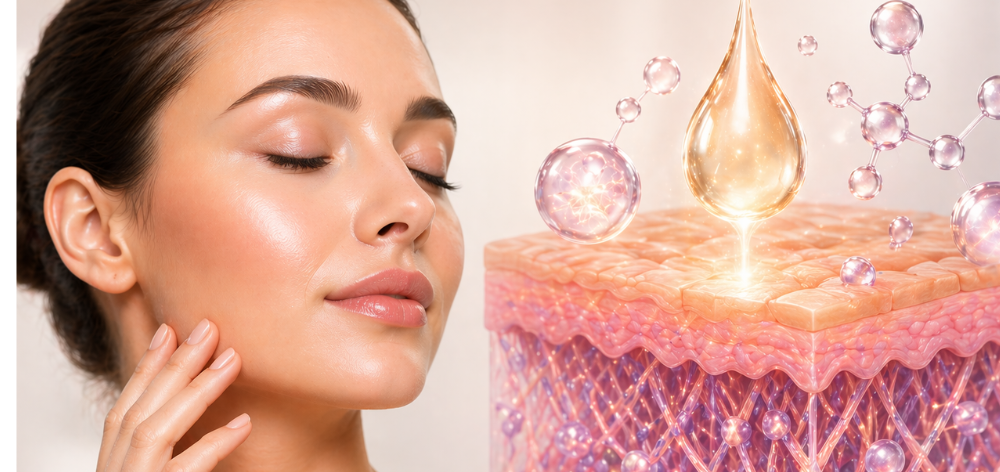
Your skin needs… nay, demands collagen for its youthful appearance. The protein helps maintain your skin’s elasticity and thickness. Unfortunately, as time passes and due to various other reasons, your skin experiences collagen loss.
The silver lining? Collagen is produced naturally in the body. A few lifestyle changes can help keep up the protein level high and preserve your skin’s smoothness.
Let’s dive into the science of it all, talk about what treatments can help boost collagen in your body:
What is Collagen?
Collagen is a protein that is found in abundance in the human body. It makes up for 30% of the total protein content. When explaining its structure scientifically, collagen is a chain of amino acids comprise of hydroxyproline, proline and glycine. It helps build the primary building block of different connective tissues, including ligaments, tendons, cartilage, bones and skin.
The skin’s middle layer – the dermis – contains collagen that provides the skin with structure and elasticity. It works with the protein elastin, helping maintain the skin’s flexibility and resilience. Together, both proteins create a supportive framework, ensuring the skin does not sag, stays hydrated, and has a firm feel to it.
What Is Collagen’s Role in Skin Health?
As the skin’s main structural protein, collagen offers various benefits, including providing strength, hydration and elasticity. It’s sort of like the scaffolding which keeps your skin lifted and smooth.
As we age, the level of collagen in our bodies declines. This usually starts in your mid-20s and continues to happen by 1% annually. When you turn 40, the decline is rapid, and the production is extremely slow, leading to reduced elasticity and drier, thinner skin.
- Sun Damage: Exposure to UV rays breaks down the collagen fibres.
- Lifestyle Factors: Stress, smoking and poor diet accelerate collagen loss.
The skin becomes more prone to wrinkles, less elastic and thinner without enough collagen. This is why it is essential to get collagen-stimulating treatments for anti-aging benefits.
How Do Treatments That Stimulate Collagen Work?
Collagen regeneration triggers when controlled micro-injuries are made in the skin, stimulating the fibroblast cells. This signals the body to produce elastin and collagen. Here are the most effective collagen-stimulating treatments:
Microneedling: Dr. Pen™ Series
How It Works: A special device or tool with dozens of tiny needles creates micro-injuries in the skin. This stimulates collagen production, addressing various skin concerns.
Best For:
- Acne Scars
- Fine Lines & Wrinkles
- Uneven Skin Texture
Laser Treatments: Fractional Multi-CO2 Laser™, PICO Laser™, SkinBrite Mult-IPL™
How It Works: With the use of heat energy, the laser penetrates the skin deeply. This triggers collagen synthesis, resurfacing the skin.
Best For:
- Skin Laxity
- Wrinkles & Fine Lines
- Hyperpigmentation & Sun Damage
Radiofrequency (RF) Therapy: HydraO2™ Facial
How It Works: By heating the skin’s deep layers, RF energy improves elasticity and stimulates collagen.
Best For:
- Fine Lines
- Mild Skin Laxity
- Preventative Anti-Aging
Biostimulatory Injectables: Sculptra®, Radiesse®, etc.
How They Work: Compared to traditional fillers, Radiesse® and Sculptra® gradually stimulate collagen, restoring volume.
Best For:
- Deep Wrinkles
- Facial Volume Loss
- Long-Lasting Collagen Renewal
Which Treatment Should I Choose?
| Concern | Best Treatment |
| Acne Scars | Microneedling, Fractional CO2 Laser |
| Fine Lines & Wrinkles | Laser Therapy, Microneedling, RF Therapy, or Injectables |
| Skin Tightening | Fractional CO2 Laser |
| Uneven Skin Texture | Laser Resurfacing, Microneedling |
| Volume Loss | Sculptra®, Radiesse® |
Are There Any Daily Habits to Preserve Collagen?
Apply Sunscreen Daily for UV Protection
UV rays significantly accelerate the breakdown of collagen by generating free radicals that alter the structure of the protein. This results in:
- Dryness
- Roughness
- Uneven Pigmentation
- Deep Wrinkles
- Loss of Skin Elasticity.
According to a study published in the Clinical, Cosmetic and Investigational Dermatology Journal, sun exposure causes 80% of your facial aging. The best way to prevent this type of skin aging is to cover your face with SPF-30 sunscreen. This will not only prevent collagen loss but also keep your skin looking young.
Since UV rays are also capable of travelling through windows, it is essential to use sunscreen daily. Have a dedicated morning skincare routine and apply sunscreen after freshening up. Do it on even overcast days and when spending time indoors. The key to ensuring that you don’t sweat it off is applying it 15 minutes before running your outdoor errand and reapplying it after two hours.
Avoiding Smoking
Tobacco smoke damages collagen in several ways. Studies show smoking reliably predicts facial wrinkle development. Cigarettes’ nicotine restricts blood vessels and limits oxygen and nutrients that collagen needs to form. Tobacco smoke also contains chemicals that harm fibroblasts—cells that make collagen. Tobacco smoke that is water-soluble delays collagen production, triggering proteins that assist in collagen breakdown already present in the body.
Limiting Alcohol and Refined Sugar Intake
Refined sugar is responsible for all that collagen damage. It works by attaching sugar molecules to the collagen protein, allowing harmful byproducts to pollute the body. The result? Collagen fibres become brittle, dry and stiff.
What makes it worse is alcohol. As your blood sugar spikes, you feel immense thirst. Not listening to what your body needs can lead to dehydration, draining your Vitamin A levels. Your body needs vitamin A to regenerate skin cells. Less of it means slower repair.
Getting Enough Sleep and Managing Stress
Sleep isn’t passive. Your skin is actively working while you rest.
Blood flow to the skin increases during sleep. Nutrients reach skin cells more efficiently. Miss out on quality sleep, and the opposite happens. Fine lines become more visible. Signs of aging show up faster.
There’s another reason sleep matters. Your body releases growth hormones at night. Those hormones are what your body uses to build new collagen. No rest, no hormone release. No hormone release, no collagen production.
Timing matters too. Cell repair peaks between 9:00 p.m. and midnight. Being asleep during that window gives your skin its best shot at recovery.
Stress is the other side of this coin. It disrupts how collagen is created and broken down. The fix doesn’t have to be complicated. Try meditation. Pick up a hobby that genuinely relaxes you. Start saying no to things that don’t need to be on your plate.
Conclusion
Collagen keeps your skin resilient, smooth and firm. With age, your body makes less of it. That’s just biology. But you are not powerless.
- What you eat matters.
- How you sleep matters.
- How you handle stress matters.
Staying consistent with your small choices adds up over time. Don’t burden yourself! Pick a habit and build your routine on it. The state of your skin reflects what’s going on inside your body. So, focus on that first, and the results will follow.